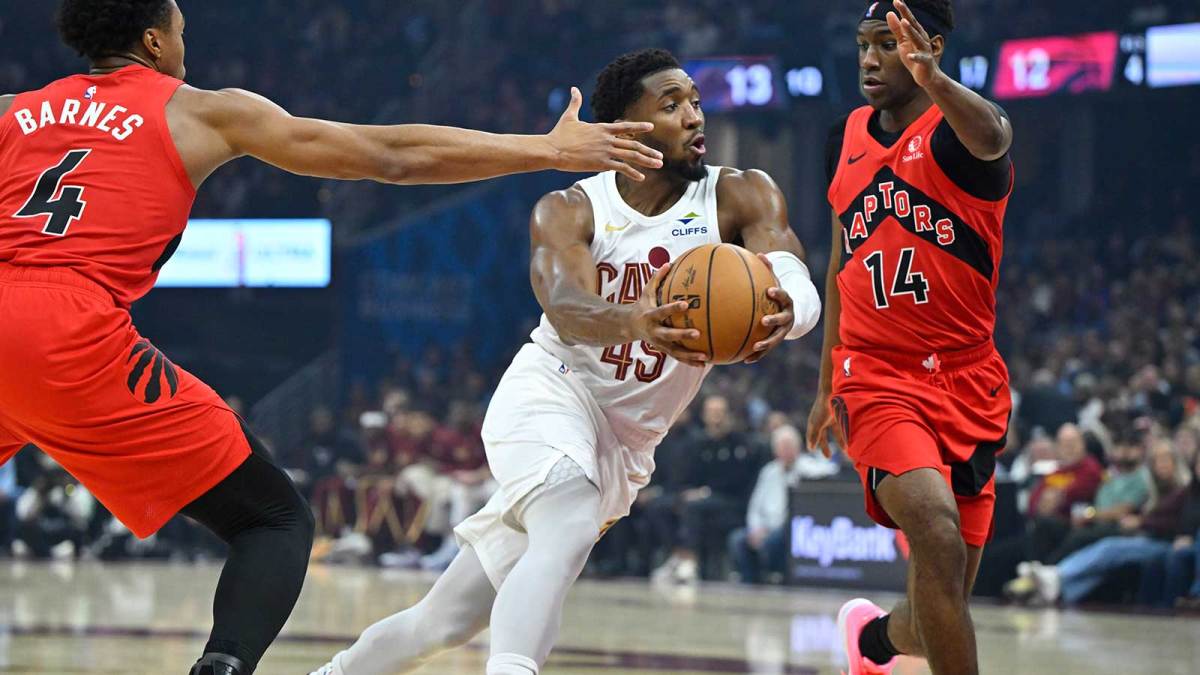
The Cleveland Cavaliers are entering the NBA Playoffs with a markedly different outlook than what their regular-season results against the Toronto Raptors might suggest.
As Cleveland prepares to host the fifth-seeded Raptors on Saturday at 1:00 p.m. ET on Prime Video, cleveland.com’s Chris Fedor outlined why Toronto’s three-game sweep of the season series carries little weight heading into a seven-game playoff matchup.
Fedor, writing in a season recap published Tuesday, emphasized that all three Raptors victories came during the opening month of the season, when Cleveland was far from its current form.
“Toronto, which finished with a 46-36 record, fifth place in the Eastern Conference, won all three head-to-head meetings between these old rivals.
But careful putting too much stock in that.
Each one came in the first month — a time when the Cavaliers were vulnerable, banged-up, disengaged and toiling in mediocrity. It was long before a roster shakeup that boosted Cleveland’s confidence and collective spirit while resuscitating its title hopes.”
Cavaliers’ early-season lineup chaos, scheduling spots make Raptors sweep misleading
Fedor noted that Cleveland rarely resembled its current playoff rotation in those matchups. Jarrett Allen and Sam Merrill each appeared in only one of the three games, while the Cavaliers cycled through a league-high 41 starting lineups during the season.
“In the Oct. 31 loss, Cleveland’s starting five was Lonzo Ball, Jaylon Tyson, De’Andre Hunter, Dean Wade and Mobley.
Ball and Hunter are gone, sent away at the trade deadline. Tyson, a second-year success story, may not crack the playoff rotation because of a wing logjam. Now-departed two-way Aussie Luke Travers got 15 minutes that night. Rookie Tyrese Proctor was the fourth most used reserve. That was a skeleton crew destined for a loss before the final note of ‘O Canada’ hit.”
He also pointed to scheduling disadvantages, including one meeting that came on the second night of a back-to-back following a road game in Miami.
“None of those three games represent who the Cavs are now, or the opponent Toronto will see this weekend.”
Beyond roster context, Fedor identified a key statistical mismatch that could define the series. Cleveland’s defense is most vulnerable when opponents generate high volumes of made three-pointers — an area where Toronto has struggled throughout the season.
Toronto’s 3-point struggles, offensive inconsistency raise concerns ahead of Cavs playoff match
© John E. Sokolowski-Imagn Images
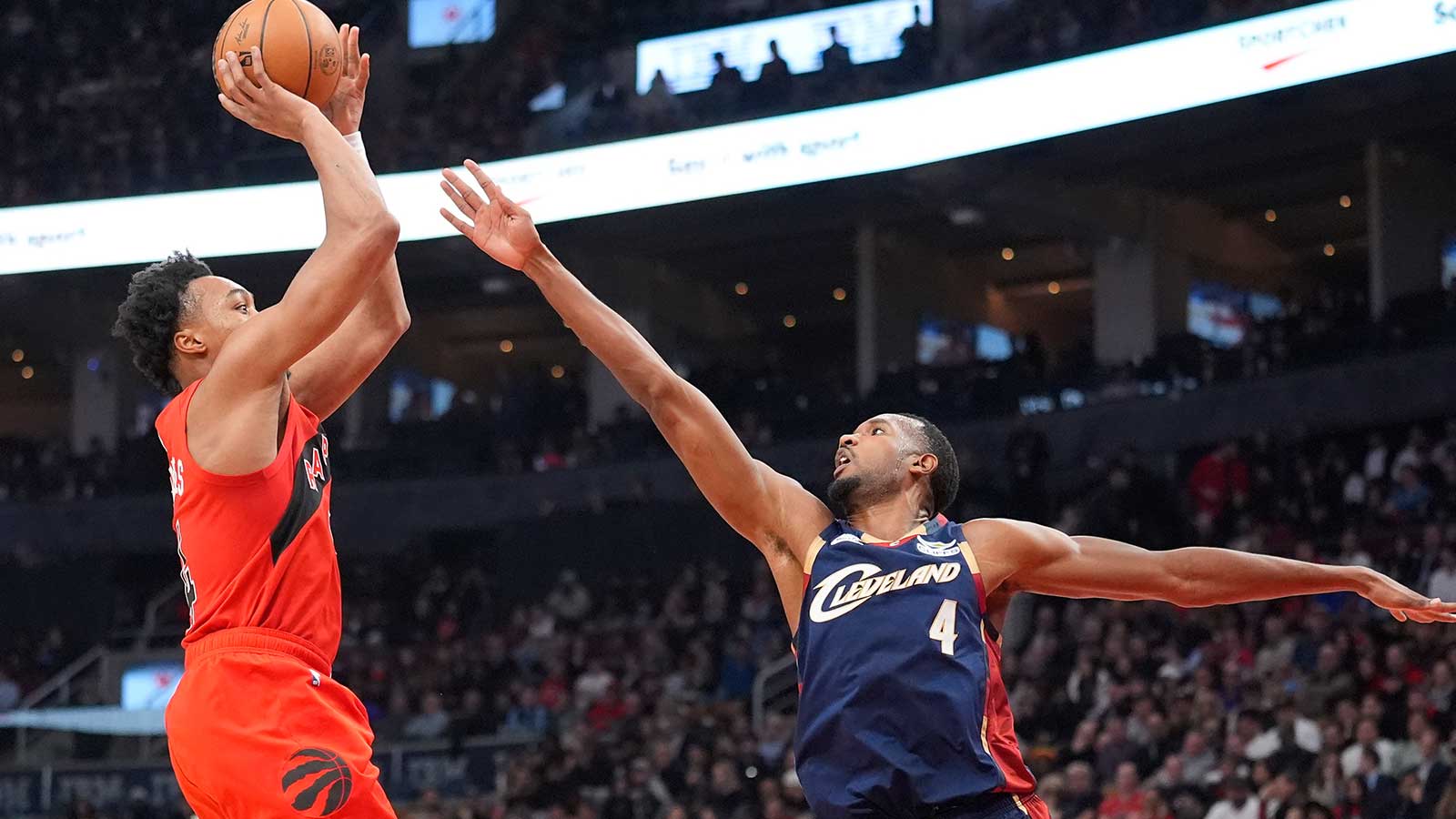
The Raptors ranked in the bottom 10 among playoff teams in all major three-point categories, with only Immanuel Quickley surpassing 150 made threes. By contrast, Cleveland posted an 18-19 record when losing the three-point battle, underscoring the importance of perimeter shooting against its defensive scheme.
While Toronto’s defensive identity — physical, active and turnover-driven — could disrupt Cleveland’s rhythm, broader trends raise concerns about its ability to sustain success in a playoff environment. The Raptors ranked 15th in offensive efficiency and were just 22-30 against teams above .500, including a 5-22 mark against the league’s top 10 teams.
Cleveland, meanwhile, enters the postseason with improved continuity, a healthier rotation and a clearer identity built around Donovan Mitchell and Evan Mobley.
Fedor acknowledged stylistic challenges but ultimately framed the matchup as favorable for Cleveland, particularly given Toronto’s offensive limitations and lack of interior size to counter Allen and Mobley.
Despite unanswered questions surrounding the Cavaliers, the Raptors’ regular-season sweep appears unlikely to dictate the outcome of a playoff series that will be defined by execution, depth and adaptability rather than early-season results.